A sore tailbone has a sneaky way of ruining ordinary moments. Sitting at your desk suddenly feels like punishment. Driving across town becomes uncomfortable. Even relaxing on the couch with a cup of tea turns into a constant shuffle for a better position.
Many Australians experience this at some point, often without realising what is causing the discomfort. The culprit is usually pressure on the coccyx, the small bone at the very bottom of the spine. When that area becomes irritated due to injury, haemorrhoids, childbirth, or surgery, even a comfortable chair can feel unforgiving.
That is where a donut cushion quietly saves the day. It might look simple, but its design is based on a clear medical principle: remove pressure from the painful spot so the body can recover.
What Exactly Is a Donut Cushion?
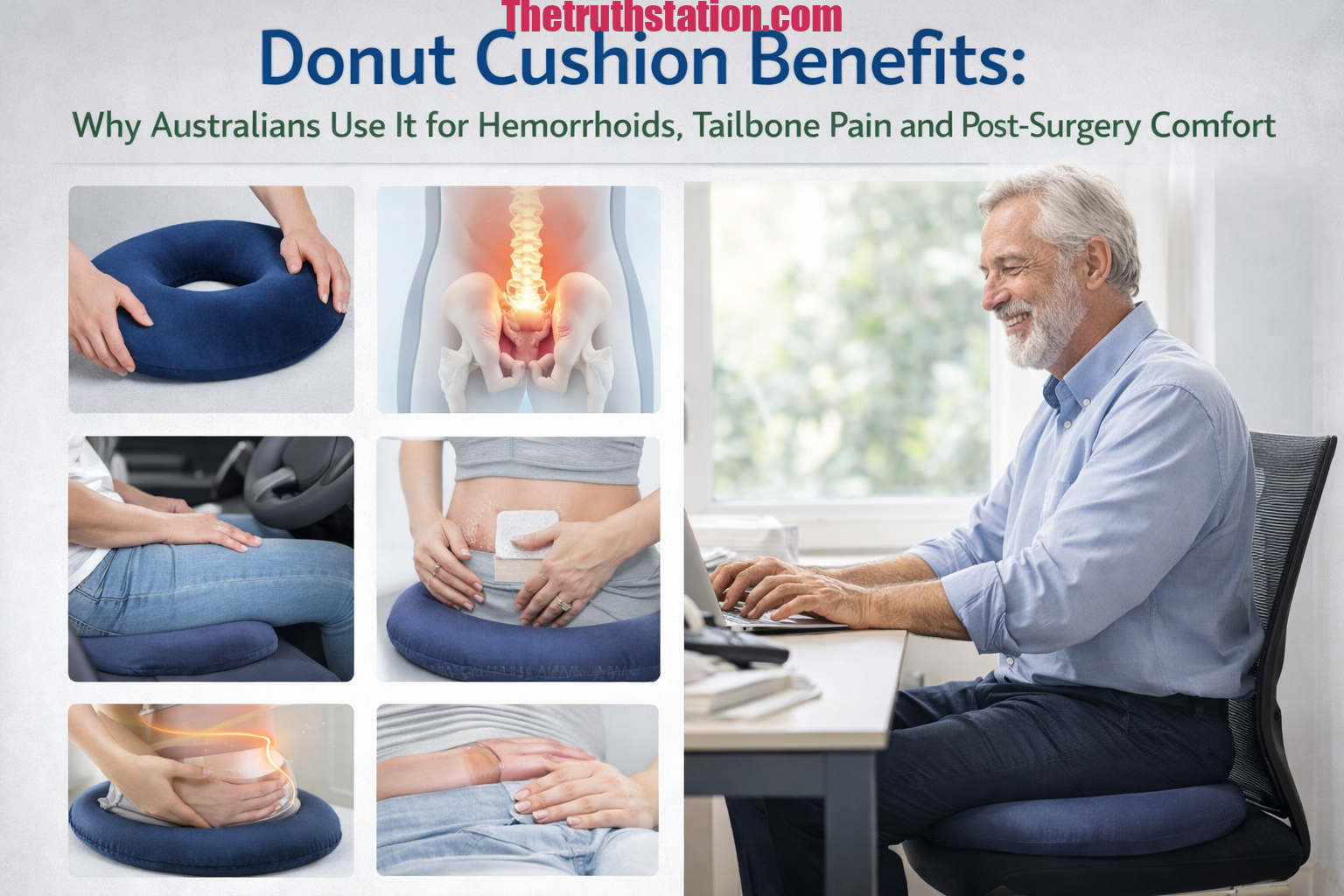
A donut cushion is a circular cushion with an open centre that resembles its bakery namesake. The gap in the middle is the clever part. Instead of your body weight pressing directly on the tailbone or rectal area, the pressure shifts to the surrounding muscles of the hips and thighs. That change might sound minor. In practice, it can make sitting dramatically more comfortable.
Doctors often recommend pressure relief cushions for patients dealing with coccyx pain, haemorrhoids, or post surgical recovery because reducing pressure helps calm inflammation and improves circulation around sensitive tissues.
Why Tailbone Pain Happens More Often Than People Realise
The coccyx plays an important role in supporting the body while sitting. Unfortunately, it is also vulnerable to strain. In Australia, several everyday habits contribute to coccyx discomfort. Long hours at office desks. Remote work setups that are not always ergonomic. Extended drives between cities or regional towns. Even minor slips or sports injuries can trigger tailbone inflammation.
When pressure constantly pushes against that small bone, the surrounding ligaments and muscles become irritated. That is when sitting starts to feel like a problem rather than a simple activity. A donut cushion lifts the pressure away from the coccyx, allowing the area to rest while you continue your day.
Relief for Hemorrhoids and Post Surgery Recovery
Haemorrhoids occur when veins around the lower rectum become swollen. According to medical research, they affect a large percentage of adults at some stage of life. Pregnancy, digestive strain, prolonged sitting, and ageing can all contribute. When the affected area is compressed while sitting, discomfort often increases. Using a donut cushion creates a space where that swollen tissue is not pressed against a chair surface. This simple adjustment can noticeably reduce pain during daily activities such as working, eating, or travelling.
Surgeons also recommend pressure relief cushions during recovery from certain pelvic or rectal procedures. Limiting pressure helps protect delicate healing tissues and promotes better circulation.
Everyday Situations Where Australians Use Donut Cushions
These cushions are not limited to hospital recovery rooms. Many Australians now keep one within easy reach. Office workers place a donut cushion on their desk chair during long workdays. Drivers rely on them for long highway trips. New parents recovering from childbirth often find them invaluable during the healing phase. Even athletes sometimes use pressure relieving cushions when dealing with lower back or pelvic injuries. It is a small piece of support that quietly improves everyday comfort.
Many Australians exploring posture and digestive wellness products also discover seating aids through retailers like Squatty Potty Australia, which focus on practical solutions designed to support healthier bathroom and sitting habits.
Choosing a Good Donut Cushion
A well made donut cushion should provide firm yet comfortable support. Memory foam options tend to maintain their shape better than basic inflatable versions, which can flatten under body weight.
Breathable covers are another helpful feature, particularly in Australia’s warmer climate where sitting for extended periods can become uncomfortable. The right cushion should support your body naturally rather than feel like you are balancing on top of it.
A Small Cushion That Changes Everyday Comfort
Health improvements do not always come from complicated treatments. Sometimes the answer is surprisingly simple. A donut cushion reduces pressure on sensitive areas, supports recovery from pain or surgery, and makes sitting comfortable again. Once people start using one, they often realise how much strain their body was dealing with before. It is not a dramatic upgrade. Yet for anyone dealing with tailbone pain or haemorrhoids, it can make the difference between constant discomfort and a normal, relaxed day.
FAQs
1. What is a donut cushion used for?
Ans. A donut cushion reduces pressure on the tailbone and rectal area, helping people sit comfortably when dealing with haemorrhoids, coccyx pain, or post surgery recovery.
2. Do donut cushions help with tailbone injuries?
Ans. Yes. By redistributing body weight away from the coccyx, the cushion helps reduce pressure and discomfort while sitting.
3. Can a donut cushion help with haemorrhoids?
Ans. Yes. The centre opening prevents direct pressure on swollen veins, which can reduce pain and irritation during sitting.
4. Are donut cushions suitable for office chairs?
Ans. Many people use them at work to reduce spinal pressure during long periods of sitting.
5. Are memory foam donut cushions better?
Ans. Memory foam cushions usually provide better long term support because they maintain shape and distribute body weight more evenly.
Disclaimer
This article is for general informational purposes only and does not constitute medical advice. While donut cushions may help relieve pressure and improve comfort for conditions such as tailbone pain, haemorrhoids, or post-surgery recovery, individual results may vary. This content is not intended to replace professional medical diagnosis, treatment, or guidance. If you are experiencing severe, persistent, or worsening symptoms, it is important to consult a qualified healthcare professional. Any references to products or retailers, including Squatty Potty Australia, are for informational purposes only and do not imply medical endorsement. The author and publisher are not responsible for any outcomes resulting from the use of the information provided.