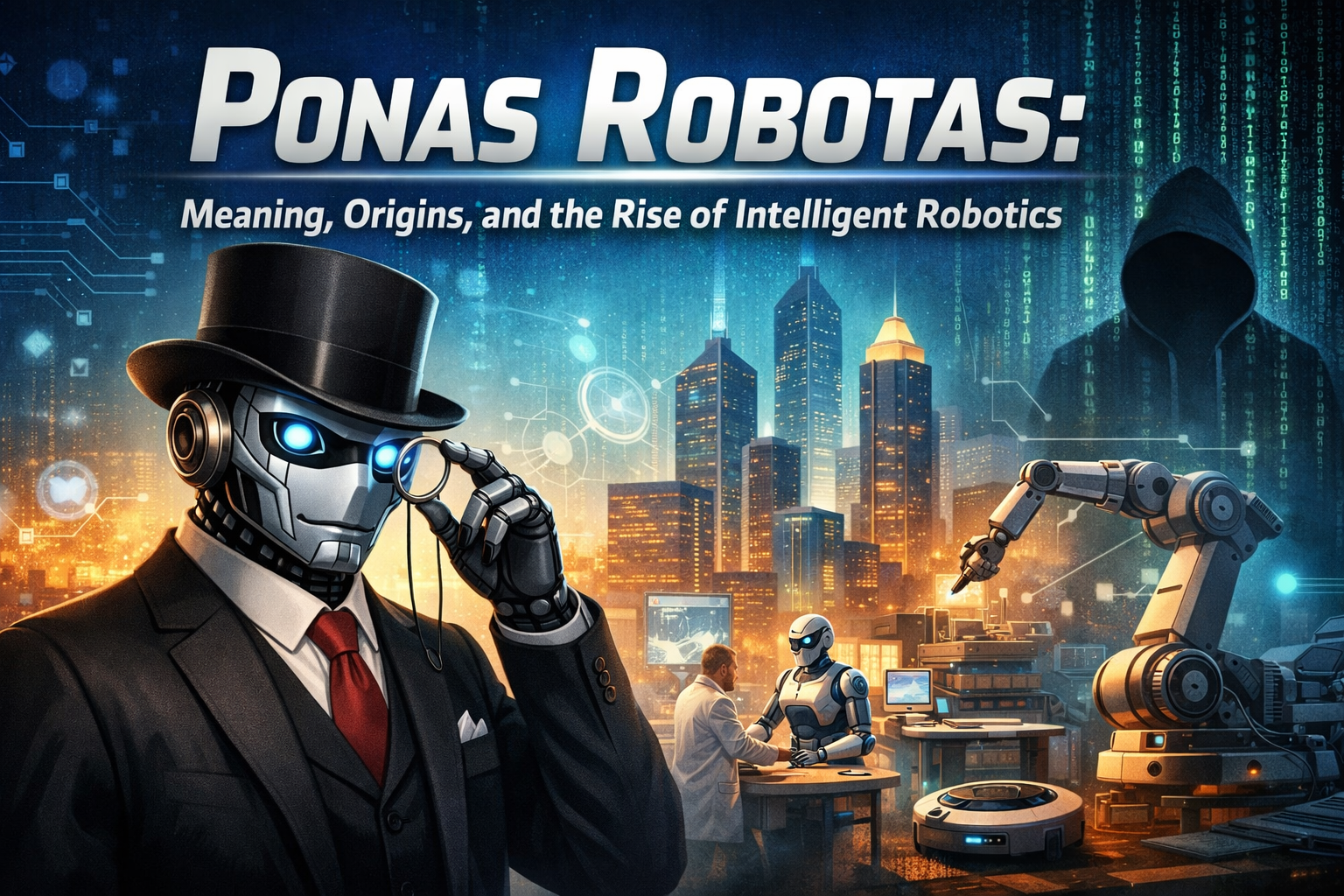
Ponas Robotas has recently attracted attention across technology blogs, cultural discussions, and online research platforms. While the term may appear simple at first glance, it carries a combination of linguistic meaning, cultural influence, and technological symbolism. In today’s rapidly evolving digital world, words connected to robotics and artificial intelligence often take on deeper significance, and Ponas Robotas is no exception.
Ponas Robotas represents the intersection of language, technology, and modern innovation. The phrase has roots in the Lithuanian language, yet its meaning now extends into discussions about artificial intelligence, robotics, and the changing relationship between humans and machines. As robots increasingly become part of daily life—from smart home assistants to industrial automation—the concept of Ponas Robotas offers a fascinating lens through which to explore the future of intelligent technology.
What Does Ponas Robotas Mean?
Linguistic Origin of the Phrase
The term Ponas Robotas originates from the Lithuanian language. In Lithuanian, the word “Ponas” means Mr., Sir, or Gentleman, while “Robotas” means robot. When combined, the phrase literally translates to “Mr. Robot.”
This translation reflects a respectful or personified way of referring to a robot. In many languages, adding a respectful title to a machine or object creates a sense of familiarity and personality. The phrase Ponas Robotas can therefore be understood as a symbolic representation of intelligent machines that interact with humans in a sophisticated and almost human-like manner.
The concept of referring to robots with human titles reflects the growing trend of humanizing technology. As artificial intelligence systems become more advanced and interactive, people naturally begin to view them as assistants or companions rather than simple tools.
Cultural Context of the Term
Beyond its literal translation, Ponas Robotas has gradually developed broader cultural associations. In technology discussions, the phrase is sometimes used to represent the idea of an intelligent robot capable of understanding human needs and assisting with complex tasks.
This cultural shift mirrors the way modern society views robots today. Instead, they are increasingly equipped with advanced algorithms, sensors, and learning capabilities that allow them to interact with humans more naturally.
Because of this transformation, the phrase Ponas Robotas has evolved into a symbol of the next generation of robotics—machines that are intelligent, responsive, and integrated into everyday life.
The Popularity of Ponas Robotas in Modern Media
Connection to the TV Series Mr. Robot
One major factor contributing to the popularity of Ponas Robotas online is its association with the television series:
Mr. Robot
The show gained worldwide recognition for its unique portrayal of cybersecurity, hacking culture, and digital activism. The story follows a cybersecurity engineer named Elliot Alderson who becomes involved in a secret hacker group led by a mysterious figure known as Mr. Robot.
In countries where Lithuanian is spoken, the title of the show is translated as Ponas Robotas. As a result, audiences familiar with the series often recognize the phrase as the localized version of the show’s name.
The series itself explores complex themes such as corporate power, digital surveillance, and the ethical challenges of technology. Because of these themes, the phrase Ponas Robotas has become associated with deeper discussions about technology’s influence on modern society.
Technology and Hacker Culture Influence
The show also played a role in shaping public awareness of cybersecurity and digital privacy. By presenting hacking and digital resistance as central elements of the storyline, it sparked interest in topics such as data security, corporate transparency, and technological control.
As a result, the phrase Ponas Robotas is sometimes connected with discussions about the digital age, particularly the challenges and opportunities created by modern technology.
This cultural connection has helped expand the phrase beyond its literal meaning, turning it into a broader symbol of technological awareness and digital transformation.
Ponas Robotas and the Evolution of Modern Robotics
Artificial Intelligence and Smart Machines
Modern robotics has advanced significantly over the past few decades. Early robots were limited to repetitive mechanical tasks, particularly in manufacturing environments. Today, however, robotics is closely integrated with artificial intelligence, enabling machines to learn from experience, analyze data, and adapt to changing environments.
These intelligent systems use technologies such as machine learning, computer vision, and natural language processing. Through these tools, robots can recognize objects, interpret spoken commands, and perform tasks with increasing autonomy.
The concept of Ponas Robotas can therefore be viewed as a symbolic representation of these intelligent machines—robots that are not only functional but also capable of interacting with humans in meaningful ways.
Human-Robot Collaboration
One of the most significant developments in robotics is the growing emphasis on collaboration between humans and machines. Rather than replacing human workers entirely, modern robots are often designed to assist people in performing complex tasks.
Collaborative robots, sometimes called “cobots,” work alongside humans in factories, laboratories, and research environments. They are programmed to enhance productivity while maintaining safety and efficiency.
This cooperative relationship between humans and machines reflects the deeper meaning behind Ponas Robotas: a robot that serves as a helpful partner rather than a distant mechanical tool.
Real-World Applications of Ponas Robotas Technologies
Robotics in Smart Homes
In recent years, robotics has become increasingly common in everyday households. Smart home devices and robotic assistants are now capable of performing tasks that once required significant human effort.
Robotic vacuum cleaners, automated lawn mowers, and voice-controlled home assistants are just a few examples of how technology is transforming domestic life. These devices use sensors, mapping technology, and artificial intelligence to navigate spaces and respond to user commands.
As these technologies become more advanced, they move closer to the idea represented by Ponas Robotas—a smart machine capable of assisting humans with daily activities.
Robotics in Healthcare
Healthcare is another field where robotics is making a significant impact. Medical robots are used in surgical procedures, patient monitoring, and rehabilitation therapy.
Robotic surgical systems allow doctors to perform highly precise operations with minimal invasiveness, reducing recovery times and improving patient outcomes. In hospitals, robotic assistants can deliver medications, transport equipment, and help monitor patients.
These advancements demonstrate how robotics can enhance human capabilities rather than replace them. In many ways, the concept of Ponas Robotas reflects the positive potential of robotics in improving quality of life.
Robotics in Industry and Manufacturing
Industrial robotics has been a cornerstone of manufacturing for decades. However, modern advancements in robotics and automation have significantly expanded the capabilities of industrial machines.
Robots in factories can assemble products, inspect components, and manage logistics operations with remarkable speed and accuracy. By integrating artificial intelligence and advanced sensors, these machines can detect defects, adjust production processes, and improve overall efficiency.
The increasing intelligence of industrial robots illustrates how the idea of Ponas Robotas aligns with the broader evolution of robotics—from simple machines to intelligent systems capable of supporting complex industries.
Ethical Questions Surrounding Robotics and AI
Automation and Job Displacement
While robotics offers many benefits, it also raises important ethical questions. One of the most widely discussed concerns is the potential impact of automation on employment.
As machines become capable of performing tasks traditionally handled by humans, some jobs may become obsolete. This shift can create economic challenges and require workers to adapt by developing new skills.
However, many experts believe that robotics will also create new opportunities, particularly in fields such as engineering, programming, data science, and technology management.
Data Privacy and Security Risks
Another concern related to robotics is data privacy. Many modern robots rely on internet connectivity, sensors, and data processing to function effectively.
Because of this connectivity, it is essential to ensure that personal information collected by these devices remains secure. Developers and organizations must implement strong cybersecurity measures to protect users from potential data breaches or unauthorized access.
Responsible AI Development
As artificial intelligence continues to advance, responsible development becomes increasingly important. Ethical guidelines and regulatory frameworks are necessary to ensure that robotics technology is used safely and responsibly.
Transparency, accountability, and fairness are key principles in the development of AI-driven robotics. By following these principles, researchers and technology companies can ensure that robots serve humanity in positive and beneficial ways.
The Future Vision of Ponas Robotas
Smart Cities and Intelligent Infrastructure
Looking ahead, robotics and artificial intelligence are expected to play a major role in the development of smart cities. Intelligent systems may help manage traffic flow, optimize energy usage, and improve public safety.
Robotic technology could assist in maintaining infrastructure, monitoring environmental conditions, and responding quickly to emergencies. These systems will rely on advanced data analysis and automation to improve urban efficiency.
Everyday Life With AI-Powered Robots
In the coming decades, robots may become common companions in everyday life. Personal assistant robots could help manage schedules, provide companionship, and assist elderly individuals with daily tasks.
Educational robots may also support learning by helping students explore subjects such as science, mathematics, and programming in interactive ways.
As these technologies evolve, the concept of Ponas Robotas will increasingly represent the idea of intelligent machines that work alongside humans to improve daily life.
Why Ponas Robotas Represents the Future of Technology
The phrase Ponas Robotas may have begun as a simple linguistic translation, but it now reflects a broader vision of the future. It symbolizes the transformation of robots from mechanical tools into intelligent partners capable of understanding and assisting humans.
As artificial intelligence continues to evolve, the boundaries between human capability and machine assistance will become increasingly interconnected. Robotics will influence industries, healthcare, education, and everyday life.
By representing this shift, Ponas Robotas serves as a reminder that technology is not merely about machines—it is about the relationship between humans and innovation.
Conclusion
The concept of Ponas Robotas offers a fascinating glimpse into the evolving world of robotics and artificial intelligence. What began as a simple phrase meaning “Mr. Robot” has grown into a symbol of technological progress and human-machine collaboration.
From its linguistic origins in the Lithuanian language to its cultural association with modern media and robotics innovation, Ponas Robotas reflects the profound impact that intelligent machines are having on society.
As robotics continues to advance, the vision represented by Ponas Robotas—intelligent, helpful, and integrated technology—will likely become an increasingly important part of everyday life. Through responsible development and thoughtful innovation, robots may soon become trusted partners in shaping a smarter and more connected future.
Disclaimer
The information provid in this article about Ponas Robotas is intend for general educational and informational purposes only. While efforts have been made to ensure accuracy, interpretations of the term may vary depending on linguistic, cultural, or technological context. References to media, robotics, or artificial intelligence are use for explanatory purposes and should not be considere professional or technical advice. Readers are encourag to conduct additional research or consult reliable sources for deeper understanding.