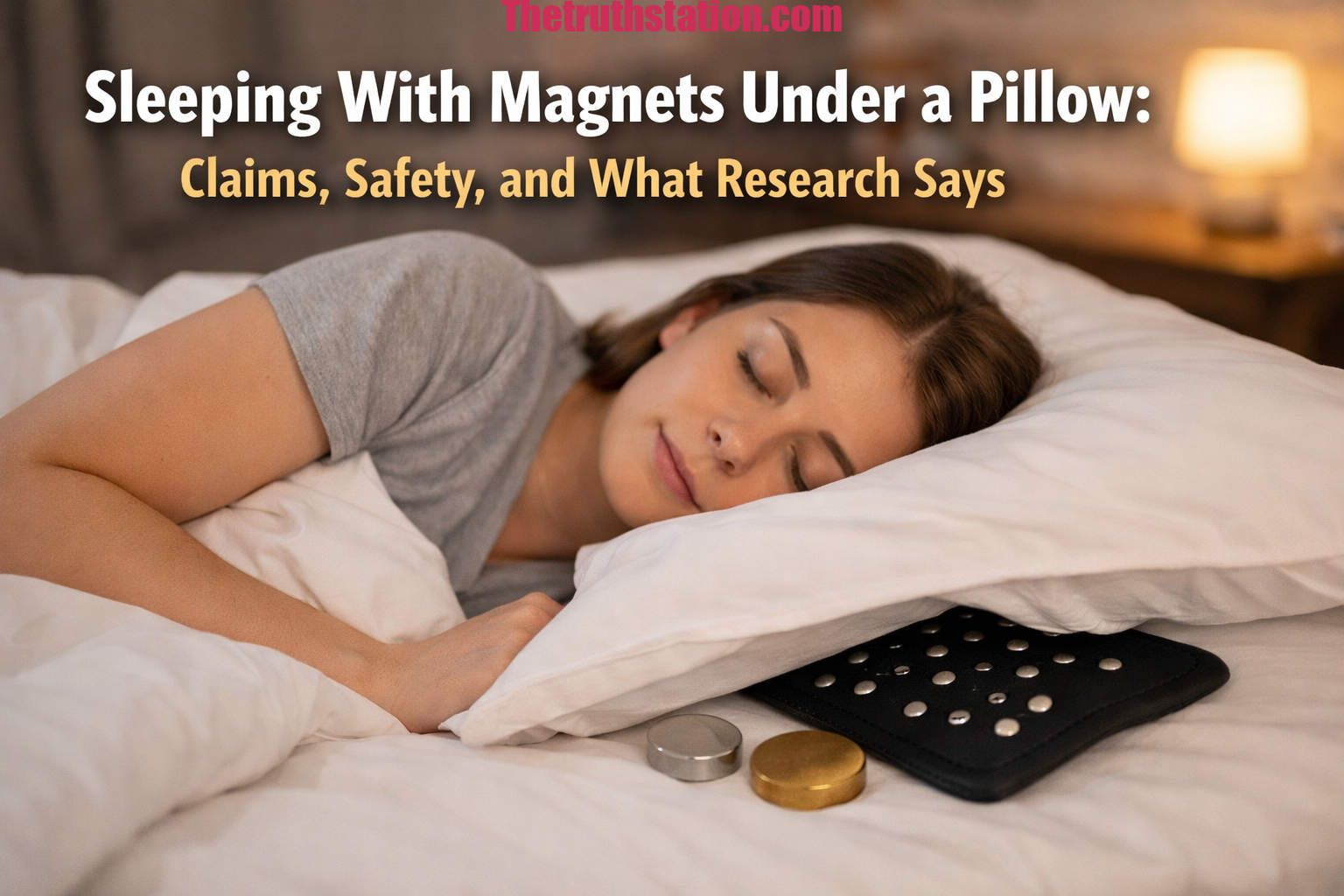
At three in the morning, the house is silent. Yet sleep refuses to cooperate. The clock ticks, the pillow gets flipped again, and the mind begins searching for anything that might help. For some people, that curiosity leads to an unusual idea: sleeping with magnets under pillow.
It may sound like a trick from an old wellness book, but the concept actually comes from decades of interest in Magnet therapy. Advocates believe gentle magnetic fields placed near the body may support relaxation, circulation, and muscle comfort.
But how much of that is real science and how much is hopeful thinking? Let’s take a closer look.
Where the Idea of Sleeping With Magnets Comes From
Magnets have fascinated humans for centuries. Ancient Greek physicians wrote about lodestones, naturally magnetic minerals believed to influence the body. Traditional Chinese medicine also experimented with magnetic stones as part of early healing practices.
Modern wellness products use static magnets, meaning they create a constant magnetic field without electricity. These magnets are often embedded into bracelets, mattress pads, and pillows.
The reason people try sleeping with magnets under pillow is simple. Sleep problems often stem from tension in the neck, shoulders, and nervous system. If magnets could help relax those areas, deeper sleep might follow.
Some users report falling asleep faster or waking with less neck stiffness after sleeping near magnets. Personal experiences vary widely, which is why researchers continue studying the effects.
What Science Says About Magnetic Fields and the Body
To understand the theory, it helps to remember that the human body is partly electrical. Nerve cells communicate through electrical impulses. Muscle movement relies on electrochemical reactions. Even the heart beats through electrical signalling.
Because magnets interact with electrical fields, scientists have explored whether they might influence biological processes such as circulation and nerve activity.
Clinical studies recorded in databases maintained by the National Institutes of Health have investigated magnets for pain conditions like arthritis and muscle strain. Results show mixed outcomes. Some participants reported reduced discomfort while others experienced no measurable difference compared with placebo treatments.
Sleep research specifically focused on magnets is still limited. However, some scientists suggest that mild magnetic exposure may influence microcirculation, the tiny blood vessels responsible for delivering oxygen to tissues. Better circulation can help muscles relax, which may indirectly support restful sleep.
Still, researchers emphasise that magnets alone are unlikely to override sleep hormones such as melatonin or fix chronic insomnia.
Are Magnets Under a Pillow Safe?
For most healthy adults, small static magnets used in wellness products are considered safe.
Typical magnetic therapy products range between 300 and 3000 gauss, far weaker than the extremely powerful magnets used in medical imaging machines. The magnetic field from a small magnet under a pillow spreads only a short distance.
That said, there are a few important precautions.
Medical Devices
People with pacemakers, cochlear implants, or insulin pumps should avoid magnets near the head or chest. Magnetic fields can interfere with sensitive electronic devices.
Comfort and Placement
Loose magnets placed under a pillow can move during sleep. That movement may cause discomfort or uneven pressure on the neck.
Realistic Expectations
Magnets should be viewed as a wellness support tool rather than a cure for sleep disorders.
A Smarter Way People Use Magnets for Sleep
Instead of placing loose magnets under a pillow, many people prefer products designed specifically for sleep support. Magnetic mattress pads and pillows distribute small magnets evenly across the bedding surface.
This approach provides a more consistent magnetic field while keeping the magnets securely inside the fabric. It also prevents the uncomfortable shifting that loose magnets can cause.
Australian wellness retailers such as Dick Wicks offer magnetic bedding designed for this purpose. These products combine soft bedding materials with carefully placed magnets intended to support relaxation throughout the night.
For individuals seeking drug free comfort, this structured design often feels far more practical.
Final Thoughts
The idea of sleeping with magnets under pillow sits somewhere between curiosity and science. Magnetic therapy is still being studied, and research results remain mixed.
Yet the concept is not entirely without logic. The body relies heavily on electrical signals, and magnets do interact with electrical systems. Whether that interaction produces meaningful sleep improvements likely varies from person to person.
For many adults dealing with restless nights, gentle wellness tools such as magnetic bedding, combined with healthy sleep habits, may help create a calmer bedtime routine.
Sometimes better sleep begins with small changes. A cooler room, a consistent schedule, and perhaps a little magnetic support working quietly in the background.
FAQs
1. Does sleeping with magnets under a pillow improve sleep?
Ans. Scientific evidence is limited. Some individuals report better relaxation, but magnets have not been proven to directly improve sleep cycles.
2. Are magnets under a pillow harmful?
Ans. Small static magnets are generally safe for healthy adults. However, people with pacemakers or other medical implants should avoid magnetic products.
3. How strong are magnets used in sleep products?
Ans. Most magnetic wellness products use magnets between 300 and 3000 gauss.
4. Can magnets help with neck tension during sleep?
Ans. Some users report reduced muscle stiffness, possibly due to improved relaxation or circulation, though research findings are mixed.
5. Is magnetic bedding better than loose magnets?
Ans. Yes. Bedding designed with built in magnets distributes magnetic fields evenly and keeps magnets securely positioned during sleep.