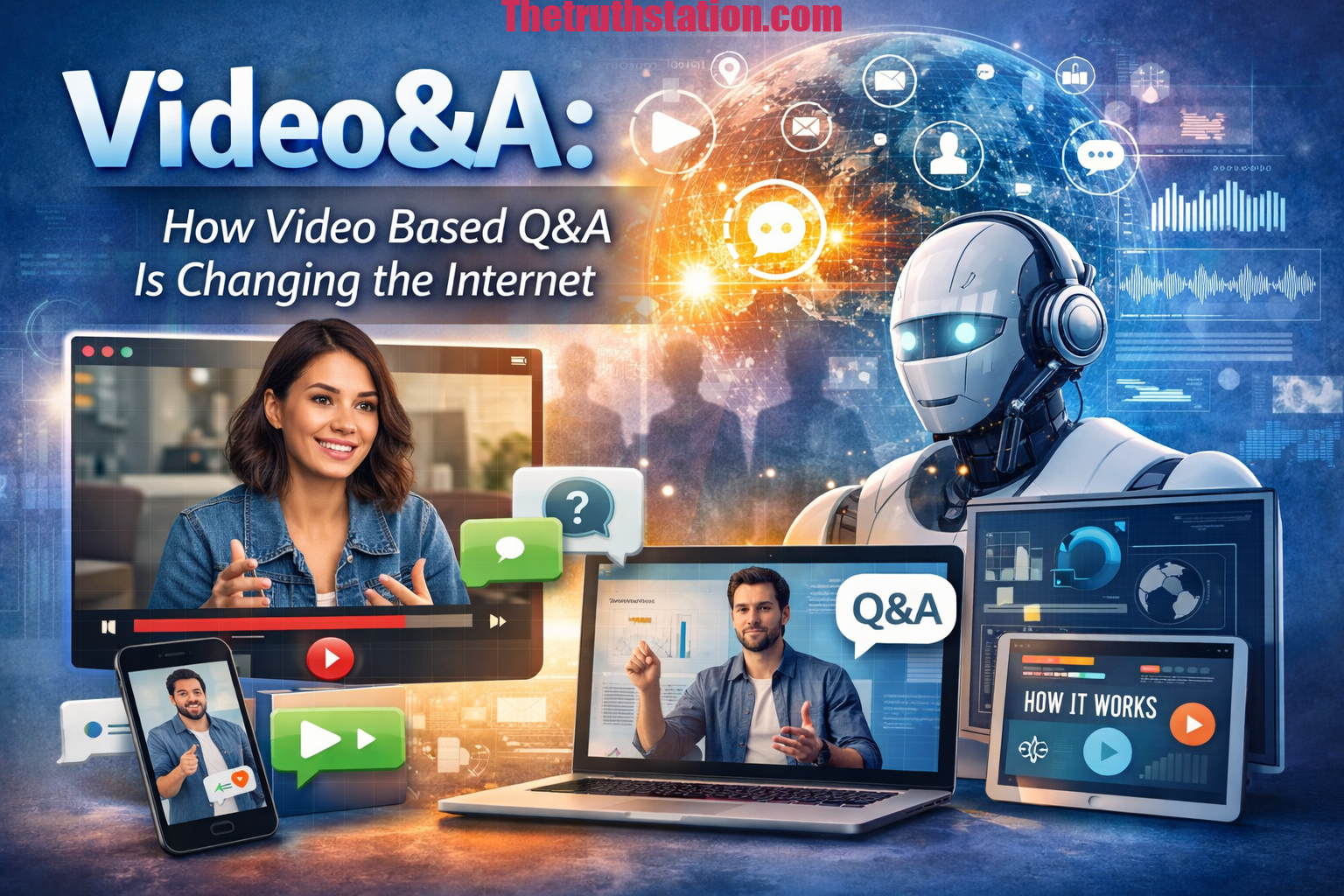
Video&A refers to a format where questions are answered using video rather than simple text responses. Instead of reading a long explanation, viewers can watch a short video that provides a clearer, more personal answer. This format combines visual presentation, spoken explanation, and audience interaction to create a richer information experience.
The popularity of video-based communication has increased significantly due to platforms like YouTube, TikTok, Instagram, and online learning environments. People are increasingly comfortable learning, exploring products, and solving problems through video explanations.
What is Video&A?
Simple Definition of Video&A
Video&A is a communication format where a question is answered using a video response rather than written text. The concept combines video content with a question-and-answer structure, allowing users to receive explanations through visual and audio communication.
Instead of reading a long paragraph explaining something, viewers watch a short video where someone explains the answer. This video may include demonstrations, facial expressions, visual examples, or screen recordings that help clarify the topic.
How Video&A Works
The basic workflow of Video&A is simple but powerful. First, a viewer, customer, or student submits a question. The person answering the question then records a video response addressing the issue directly. This video is then shared with the questioner and often published publicly so others with the same question can benefit from it.
In many cases, Video&A responses become reusable content. A single video answer may help hundreds or thousands of people who have the same question in the future.
For example, a teacher might answer a student’s question about a complex topic through a short explanation video. Once recorded, that same video can be used repeatedly for other learners who encounter the same confusion.
Why Video&A Feels More Human Than Text Communication
One of the biggest advantages of Video&A is that it restores the human elements of communication that are often lost in written text. When people communicate through text alone, important cues such as tone of voice, facial expressions, and emotional context disappear.
Video communication restores these signals. Viewers can see the speaker’s expressions, hear their tone, and observe their gestures. These elements make the explanation easier to understand and create a stronger sense of trust.
This human connection makes Video&A feel closer to a real conversation, even when communication occurs asynchronously across the internet.
Evolution of Video&A
Early Digital Communication
In the early days of the internet, most question-and-answer communication occurred through text. Forums, discussion boards, and email messages were the primary ways people asked questions and shared knowledge online.
While effective, these formats often lacked clarity and emotional context. Long text explanations could be difficult to understand, especially for complex topics.
Rise of Video Communication
As internet speeds improved and video hosting platforms emerged, video became one of the most popular forms of digital content. Websites such as YouTube allowed creators to explain ideas visually, making tutorials and demonstrations easier to follow.
Live streaming and video conferencing also became common, allowing real-time conversations between audiences and content creators.
Modern Interactive Video Formats
Today, many social media platforms allow creators to respond to audience questions directly with video. TikTok, Instagram, and YouTube all support features where creators can reply to comments with short videos.
This approach encourages direct interaction between creators and their audiences. Instead of simply watching content, viewers become active participants who influence what videos are created next.
Types of Video&A
Creator Video Replies
Content creators frequently use Video&A to answer questions from their followers. When viewers ask questions in comments or messages, creators respond with a video explanation.
These responses often generate additional engagement because audiences feel that their questions are being acknowledged and addressed personally.
Business Video&A
Businesses also use Video&A to improve communication with customers. Instead of sending long written instructions or support emails, companies can record short videos demonstrating solutions to common problems.
These videos may show how to use a product, explain troubleshooting steps, or answer frequently asked questions. This approach often saves time while improving customer satisfaction.
Educational Video&A
Students can submit questions about course material, and instructors can provide clear explanations through video.
This approach is particularly helpful for online learning environments where students may not have the opportunity to ask questions in person.
AI-Powered Video&A Systems
In recent years, artificial intelligence researchers have begun developing systems capable of answering questions about video content automatically. These systems analyze video frames, audio signals, and spoken language to understand what is happening in a video.
Once the system understands the context, it can generate answers to questions about the video. This field is known as Video Question Answering (VideoQA) and represents an exciting area of research in multimodal artificial intelligence.
Why Video&A Is Becoming Important
Human Brain Prefers Visual Communication
Humans naturally process visual information more quickly than text. Watching a demonstration or explanation video often makes complex ideas easier to understand than reading a long written explanation.
Because video includes both visual and auditory signals, it provides multiple ways for viewers to absorb information.
Higher Audience Engagement
Video content tends to capture attention more effectively than written text. People are more likely to watch a short video than read a long paragraph explaining the same concept.
This higher engagement helps creators maintain audience interest and build stronger communities.
Improved Information Retention
Studies in education have shown that people remember information better when it is presented through multiple sensory channels. When viewers both see and hear an explanation, they are more likely to remember the content later.
Video&A takes advantage of this principle by combining spoken explanations with visual demonstrations.
Real-World Applications of Video&A
Video&A in Social Media Platforms
Social media platforms have popularized Video&A through features that allow creators to respond to questions with video content. These responses often become viral because audiences enjoy seeing creators interact directly with their community.
Video&A in Education and Online Learning
Educational platforms increasingly use video responses to answer student questions. Teachers can record clear explanations that help learners understand difficult topics more effectively than written text alone.
Video&A in Customer Support
Many companies are replacing traditional support articles with video tutorials that walk users through common problems step by step. These videos can reduce confusion and improve customer satisfaction.
Video&A in Marketing and Content Strategy
Marketing teams use video responses to explain products, address customer concerns, and demonstrate expertise. This approach builds trust and helps potential customers make informed decisions.
Benefits of Using Video&A
Stronger Audience Trust
Seeing a real person explain something builds credibility and trust more quickly than reading anonymous text.
Higher Content Engagement
Video encourages viewers to stay longer and interact more actively with content.
Better Learning Experience
Visual explanations improve comprehension and help learners retain information more effectively.
Scalable Knowledge Sharing
A single video response can answer the same question for many people, creating reusable educational content.
Challenges of Video&A
Technical Complexity
Producing video responses requires recording equipment, editing tools, and technical knowledge.
Production Time
Creating video responses takes more time than writing quick text answers.
Privacy and Ethical Concerns
Video communication may involve sharing personal images and voices, raising potential privacy considerations.
Future of Video&A
The future of Video&A is closely linked to advances in artificial intelligence and digital communication technologies. Multimodal AI models capable of understanding video, audio, and text simultaneously are becoming more powerful.
In the coming years, Video&A may expand into immersive environments such as virtual reality and augmented reality. In these environments, users could interact with digital tutors or assistants that answer questions through visual demonstrations inside virtual spaces.
As technology evolves, Video&A is likely to become an increasingly common way for people to exchange knowledge online.
Best Practices for Creating Video&A Content
Creators who want to use Video&A effectively should encourage meaningful questions from their audience. Keeping responses short, clear, and visually engaging helps maintain viewer interest.
Using demonstrations, diagrams, or screen recordings can make explanations easier to follow. Consistent posting schedules also help audiences develop the habit of engaging with Video&A content.
When Video&A Is Not Necessary
Although Video&A is powerful, it is not always the best solution. Simple factual questions such as opening hours or basic contact information can be answered quickly with text.
Using video for every question may waste time and resources. The format works best when visual explanation or personal connection adds significant value.
Conclusion
Video&A represents an important evolution in digital communication. By combining video explanations with interactive question-and-answer formats, it creates a richer and more engaging experience than traditional text responses.
Whether used by creators, educators, businesses, or AI systems, Video&A helps people communicate more clearly and build stronger connections with their audiences. As technology continues to evolve and video becomes an even more dominant form of content, Video&A is likely to play a central role in how information is shared and understood online.
Frequently Asked Questions
What does Video&A mean?
Video&A refers to a format where questions are answered using video responses instead of written text.
How is Video&A different from traditional Q&A?
Traditional Q&A uses written responses, while Video&A provides explanations through video, including visual demonstrations and spoken communication.
Which platforms support Video&A?
Platforms such as TikTok, Instagram, and YouTube allow creators to reply to questions with video responses.
Is Video&A useful for businesses?
Yes. Many businesses use video responses to answer customer questions, explain products, and provide tutorials.
Can artificial intelligence support Video&A?
Yes. AI systems are being developed that analyze video and audio content to answer questions automatically.
Disclaimer
The information provided in this article about Video&A is for general informational and educational purposes only. While efforts have been made to ensure accuracy and clarity, the content may include interpretations of evolving technologies and digital communication trends. The article does not constitute professional, technical, or business advice. Readers should conduct their own research or consult qualified professionals before implementing any strategies, tools, or technologies discussed. Any references to platforms, technologies, or AI systems are for illustrative purposes only and may change over time as the field continues to develop.