









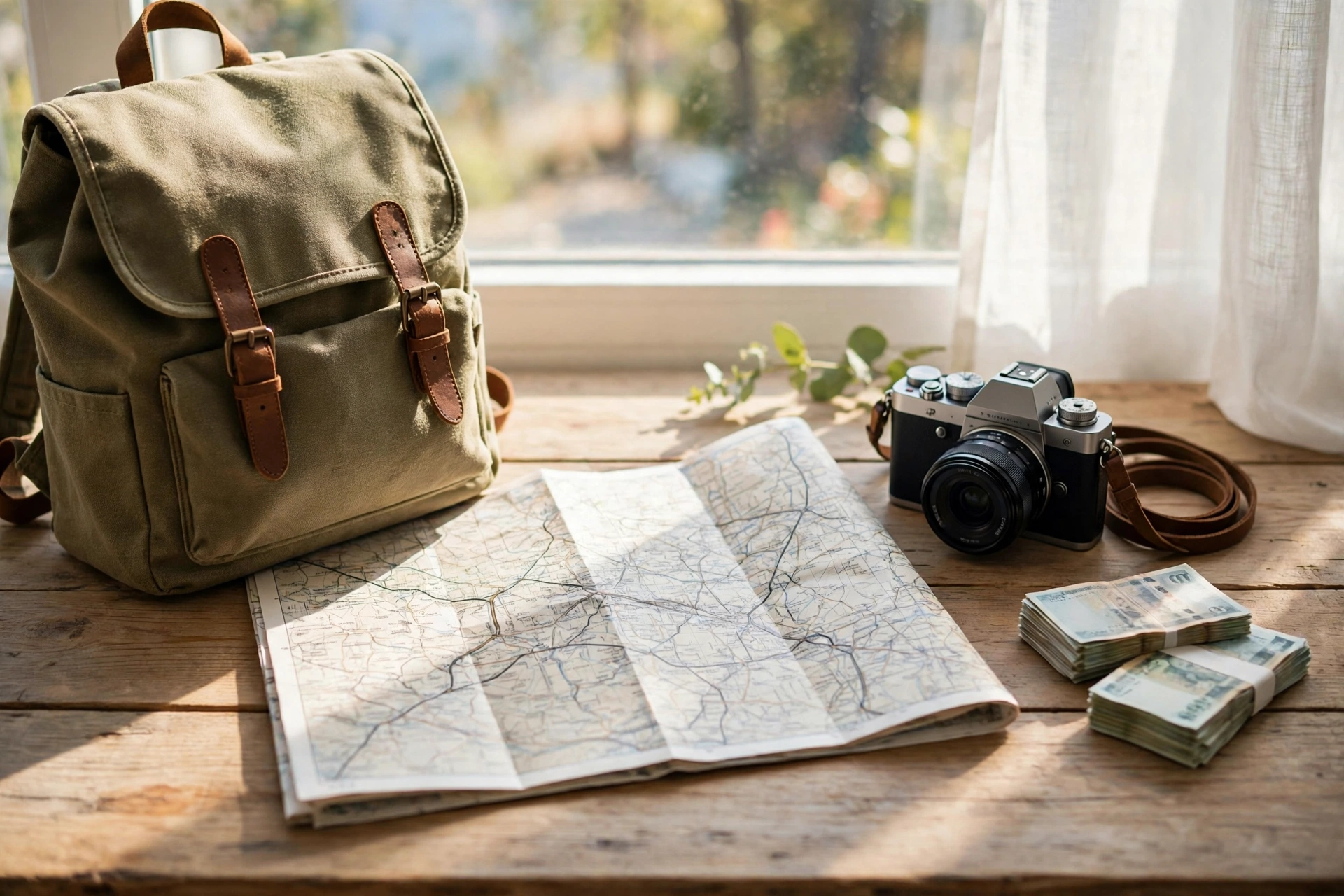
A budget trip is not a trip where you miss everything good. It is a trip where you spend deliberately: you put your money into the experiences that matter most to you, and you cut the costs that do not add to the experience — the overpriced hotel room you only sleep in, the taxi you could have replaced with a metro ride, the restaurant in the tourist square when a better one sits two streets away. Planning a budget trip well means you see more, not less. This guide shows how to plan a trip that is cheap where it should be cheap and generous where it counts.
Start With a Realistic Total Budget
Before you look at flights or hotels, decide how much the whole trip can cost. Add up transport, accommodation, food, activities, local transport, and a buffer of 10 to 15 percent for surprises. Then divide the total by the number of days to get a daily budget — that single number makes every later decision easier. If the daily figure is $80, you know immediately whether a $120 hotel or a $40 dinner fits. Be honest about what you will actually spend: a budget that assumes you will eat only street food and never take a taxi is a fantasy, and a fantasy budget is worse than no budget at all. It is far better to plan for three comfortable days than five miserable ones.
Book Transport and Stays at the Right Time
Transport and accommodation are usually the two biggest costs, and timing is everything. Flights are generally cheapest when booked six to eight weeks ahead for short trips, and flexible dates can save a surprising amount — flying on a Tuesday or Wednesday is often far cheaper than a Friday or Sunday. Set a price alert and buy when the fare drops rather than checking obsessively. For stays, compare a hotel, a guesthouse, and a short-term rental for the same dates: a rental with a kitchen can save more on food than it costs extra in rent, and a guesthouse slightly outside the centre is often half the price of a central hotel for a ten-minute walk. Consider hostels too — many now offer clean private rooms at a fraction of hotel prices. If you are flexible about where you sleep, you can put the savings into the parts of the trip you will actually remember. You can also follow your flight in real time with aviation and flight tracking tools, which helps if you need to tell someone when you will land.
Plan the Days, Not Just the Flights
A good itinerary is what separates a cheap trip from a good cheap trip. Before you go, list the places and experiences that matter most to you — the one museum, the viewpoint, the food market, the day trip — and build the days around those, grouping nearby sights together so you are not criss-crossing the city. Leave one slot each day unscheduled, because the best discoveries are usually unplanned, and a packed schedule leads to tired, expensive decisions such as overpriced taxis and rushed meals. Check which attractions are free on certain days, whether a city pass actually saves money for your specific plans, and what the opening hours are — arriving at a closed museum is a wasted journey. Download offline maps and a translation app before you travel, so you are not paying for data or getting lost.
Eat Well Without Paying Tourist Prices
Food is where budget travellers either save the most or waste the most. The rule is simple: eat where locals eat. Walk two streets away from the main square, look for places full of local people, and follow the lunch crowd — a busy local restaurant is almost always better and cheaper than an empty tourist one. Markets and bakeries are excellent for breakfast and snacks, and a rental with a kitchen lets you cook a few simple meals, which can halve your food bill. Try the local specialities rather than familiar international food, which is usually overpriced abroad. And carry a reusable water bottle and a few snacks, so hunger never forces you into the nearest expensive cafe. A great meal in a small family restaurant will be one of your best memories — a mediocre meal in a tourist trap will be one of your biggest regrets, and it will cost twice as much.
Save on Getting Around
Local transport is usually cheap and often part of the experience. Buy a multi-day metro or bus pass if you will use it several times a day, and walk whenever the distance is under thirty minutes — walking is free, and it is how you discover a city. Avoid taxis from airports, where the markup is highest; a bus or train is usually a fraction of the price and only slightly slower. If you need a taxi, use a ride-hailing app with a fixed upfront price rather than hailing one on the street. For day trips, compare a local bus with an organised tour: the bus is almost always cheaper, and it gives you freedom over your time.
Common Mistakes That Blow a Travel Budget
The most common mistake is booking the cheapest flight without checking the extras: a low fare with expensive baggage, a distant airport, and a 6 am departure can cost more in total than a slightly dearer flight to the main airport. Another is over-scheduling — a trip packed with paid attractions leaves no room for the free pleasures, such as parks, markets, and viewpoints, that often become the highlights. Many travellers exchange money at the airport or a hotel, where rates are worst, instead of using a fee-free card or withdrawing from an ATM. Others forget to tell their bank they are travelling, and end up with a blocked card and an expensive phone call. And a surprising number of people book non-refundable everything to save a little, then lose far more when plans change. Flexibility is worth paying a small premium for, and travel insurance — which covers cancellations and medical costs — is the one expense you should never skip to save money. Flight delays and diversions happen even on well-planned trips, so it helps to know what happens when a flight is diverted and what to do next.
Frequently Asked Questions
How much should I budget for a trip?
It depends on the destination, but a useful method is to add up transport, accommodation, food, activities, and local transport, then add a 10 to 15 percent buffer. Divide by the number of days for a daily budget that guides every decision.
When is the cheapest time to book flights?
For short trips, six to eight weeks ahead is often cheapest, and midweek flights are usually cheaper than weekend ones. Set a price alert and book when the fare drops, rather than waiting for a last-minute deal that may not come.
Are hostels safe for budget travellers?
Yes, reputable hostels are safe and many now offer clean private rooms. Read recent reviews, choose hostels with lockers and good ratings, and keep valuables in a small lockable bag.
How can I save money on food while travelling?
Eat where locals eat, away from the main tourist squares. Use markets and bakeries for breakfast, cook a few meals if your stay has a kitchen, and try local specialities instead of overpriced international food.
Do I need travel insurance for a budget trip?
Yes. Travel insurance covers cancellations, lost luggage, and medical costs, which can be enormous abroad. It is the one expense you should never skip to save money, and basic cover is usually inexpensive.
Is a city pass worth buying?
Only if you will use it enough. Add up the cost of the attractions you actually plan to visit and compare it with the pass price. If you prefer a slower pace with fewer paid sights, the pass rarely pays for itself.
What is the best way to carry money abroad?
Use a fee-free travel card for most spending and withdraw local cash from ATMs as needed. Avoid exchanging money at airports or hotels, where rates are worst, and tell your bank you are travelling so your card is not blocked.