








Sleep hygiene is the set of everyday habits that help you fall asleep easily, stay asleep through the night, and wake up feeling rested. It is not a medicine or a gadget — it is the routine around your sleep: when you go to bed, what you do in the hour before, how dark and cool your bedroom is, and what you consume during the day. Most sleep problems are not caused by a single dramatic issue but by a handful of small habits that quietly work against rest. This guide explains the habits that actually improve sleep, why they work, and how to build them into a normal life. The good news is that most of these habits are free, and you can start tonight.
Keep a Regular Sleep Schedule
Your body runs on an internal clock that expects sleep at roughly the same time every day. Going to bed and waking up at consistent times — including weekends — trains that clock, so you start feeling sleepy at the right hour and alert in the morning. A lie-in on Sunday feels good in the moment, but it shifts your clock later and makes Monday morning harder, a pattern sometimes called social jet lag. Pick a bedtime that gives you seven to nine hours before you need to wake, keep it within about half an hour from day to day, and set a regular alarm rather than relying on willpower to get up.
Build a Wind-Down Routine
You cannot switch from a busy, bright, stimulating evening to sleep in five minutes. Your brain needs a wind-down period of 30 to 60 minutes. Dim the lights, put the phone away, and do something calm and predictable: read a book, take a warm shower, stretch gently, or follow a relaxation ritual that helps you unwind. The routine itself matters less than its consistency — after a week or two, the sequence becomes a signal that tells your body sleep is coming. What you should avoid in that hour is anything that raises alertness: work emails, intense exercise, arguments, and bright screens. If you must use a screen, lower the brightness and switch it to a warm night mode.
Make Your Bedroom a Place for Sleep
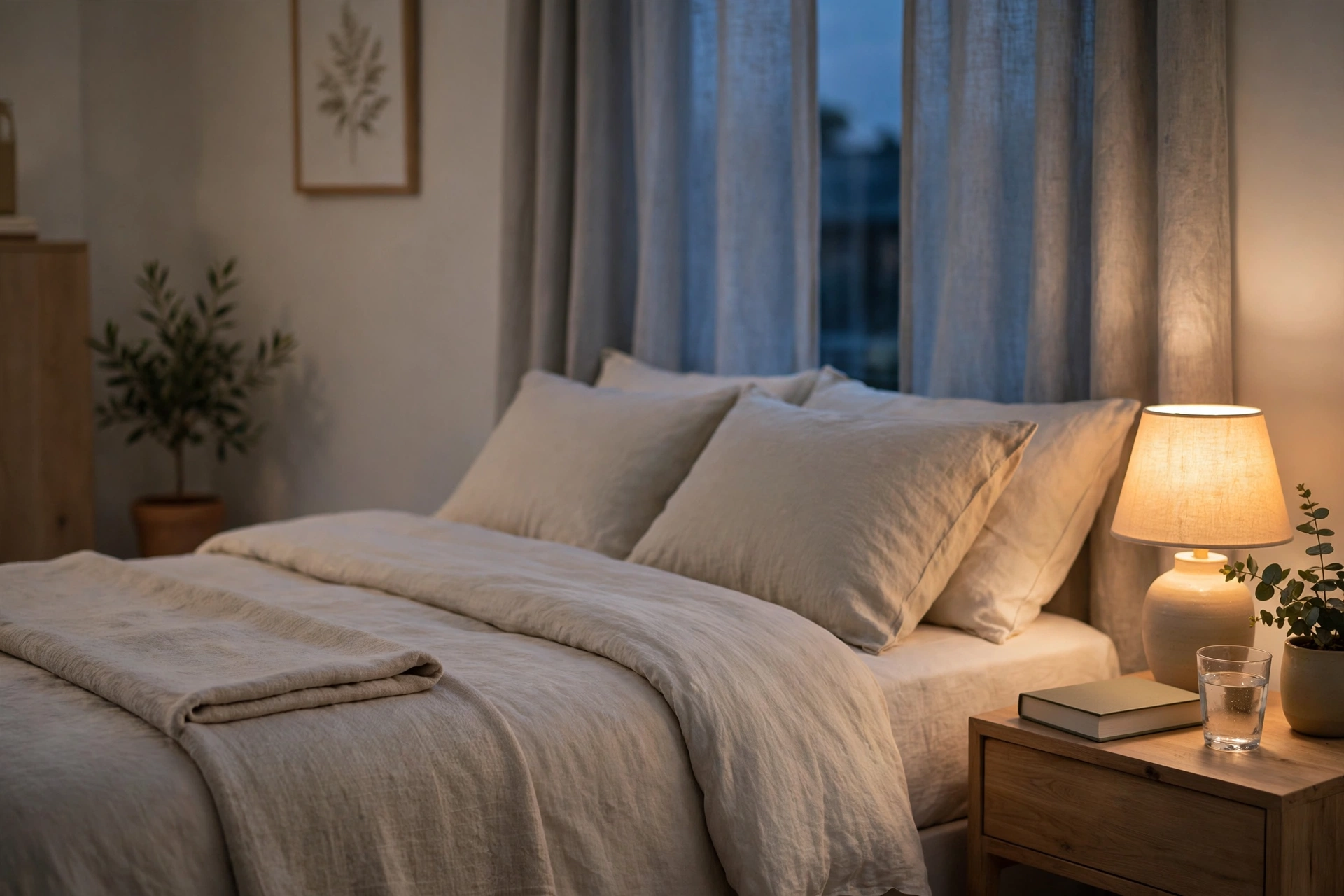
Your bedroom should be dark, quiet, and cool. Blackout curtains or a sleep mask block street light, earplugs or a white-noise machine soften household sounds, and a room temperature around 18 to 20 degrees Celsius suits most sleepers. Reserve the bed for sleep and intimacy only — if you regularly work, eat, or scroll in bed, your brain stops associating it with rest. Keep the room tidy and free of clutter, because a chaotic space is harder to relax in, and consider a comfortable mattress and pillow as an investment in the third of your life you spend there. If you find yourself lying awake worrying about comfort or pain, it is worth looking into simple supports such as a pillow that supports better sleep — but no product replaces the basics of darkness, quiet, and a regular schedule.
Watch What You Eat and Drink
Caffeine is the most common sleep saboteur. It blocks the chemical that makes you feel sleepy, and it stays in your body far longer than most people realise — a coffee at 4 pm can still be affecting you at midnight. Set a caffeine cut-off of eight hours before bed, and remember that tea, cola, energy drinks, and some painkillers also contain it. Alcohol is a trap too: it may make you drowsy, but it fragments sleep and suppresses the deep, restorative stages, so you wake up tired despite a full night in bed. A heavy meal late at night can cause discomfort and reflux, while a light snack is fine. And while a warm drink such as herbal tea or warm milk can be a pleasant part of a wind-down routine, the effect is mostly about the ritual rather than the drink itself.
Use Daylight and Movement in Your Favour
Light is the strongest signal for your internal clock. Getting bright light in the morning — ideally by going outside within an hour of waking — tells your body the day has started and helps you feel sleepy at the right time that evening. Conversely, bright light late at night, especially from screens, delays sleepiness. Regular exercise also improves sleep, but timing matters: vigorous exercise is best done earlier in the day, while gentle movement such as walking or stretching is fine in the evening. Even a short walk outside at lunchtime helps, because it combines daylight and movement in one easy habit.
Common Mistakes That Ruin Sleep
The most common mistake is staying in bed while awake and frustrated. If you have been lying awake for about 20 minutes, get up, go to another room, and do something quiet and boring in dim light until you feel sleepy, then return to bed. Lying there worrying trains your brain to associate the bed with wakefulness. Another mistake is napping too late or too long — a short nap before 3 pm can be refreshing, but a long evening nap steals from the night. Many people also try to catch up on sleep by sleeping in for hours at the weekend, which only shifts their clock. And a surprising number rely on sleep aids, alcohol, or melatonin supplements as a first resort, when the habits above fix the problem more reliably and without side effects. If sleep problems persist for more than a few weeks despite good habits, it is worth speaking to a doctor, because conditions such as sleep apnoea or insomnia need proper assessment.
Frequently Asked Questions
How many hours of sleep do adults need?
Most adults need seven to nine hours a night. Some people function well on seven, others need nine, and the right amount is the one that leaves you alert and in a good mood during the day without relying on caffeine.
Is it bad to look at my phone before bed?
Yes, for two reasons: the bright light delays sleepiness, and the content — news, messages, social media — keeps your brain alert. Put the phone away at least 30 minutes before bed, and charge it outside the bedroom if you can.
Does exercise help you sleep better?
Yes, regular exercise improves sleep quality and helps you fall asleep faster. Aim for at least 30 minutes of moderate activity most days, and finish vigorous workouts at least a few hours before bedtime.
Should I nap during the day?
A short nap of 10 to 20 minutes before 3 pm can boost alertness. Longer or later naps can make it harder to fall asleep at night, so keep naps brief and early if you take them at all.
What should I do if I wake up in the middle of the night?
Stay calm, keep the lights low, and avoid checking the time or your phone. If you are still awake after about 20 minutes, get up and do something quiet in dim light until you feel sleepy again, then return to bed.
Does caffeine really affect sleep that much?
Yes. Caffeine has a half-life of about five to six hours, so a coffee at 4 pm means half of it is still in your system at 10 pm. Keep your last caffeinated drink at least eight hours before bedtime.
Is melatonin a good sleep aid?
Melatonin can help with timing — such as jet lag or shift work — but it is not a strong sleeping pill, and its quality varies between brands. Good sleep habits are more reliable for most people, and you should speak to a doctor before using it regularly.
How long does it take to fix bad sleep habits?
Most people notice improvement within one to two weeks of keeping a regular schedule and a proper wind-down routine. Be patient: your internal clock adjusts gradually, and a single bad night does not undo the progress.