








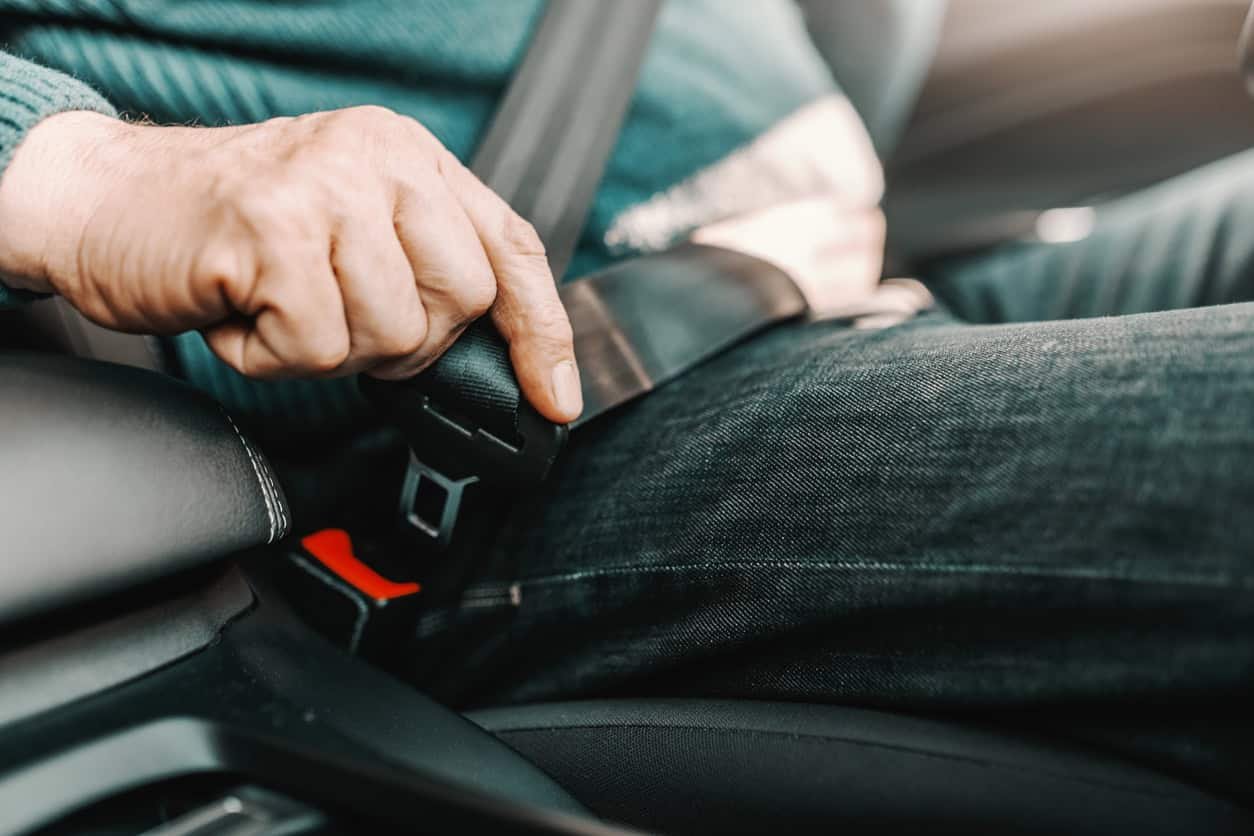
Buckling your seat belt takes just a few seconds, but those seconds could mean the difference between life and death in a car accident. Despite decades of public awareness campaigns, vehicle safety improvements, and seat belt laws, thousands of Americans continue to lose their lives in crashes while unrestrained. According to the National Highway Traffic Safety Administration (NHTSA), 9,758 passenger vehicle occupants who died in traffic crashes in 2024 were not wearing seat belts. Understanding how seat belts work, why they matter, and the risks associated with not wearing one can help drivers and passengers make safer decisions every time they get into a vehicle.
Quick Highlights
Seat belts reduce serious crash-related injuries and deaths by approximately 50%, according to the Centers for Disease Control and Prevention (CDC).
- In 2024, 9,758 unrestrained passenger vehicle occupants died in traffic accidents across the United States.
- The national seat belt use rate was 91.3% in 2025 among adult front-seat passenger vehicle occupants observed during daytime hours.
- Nighttime crashes pose a significant concern: In 2024, 56% of passenger vehicle occupants killed in nighttime crashes were not wearing seat belts.
- Seat belts protect back-seat passengers, too. Nearly 60% of rear-seat passengers killed in 2024 crashes were unbuckled, among those with known restraint use.
- Airbags do not replace seat belts. Both safety systems are designed to work together to reduce injuries during a collision.
- Proper seat belt positioning matters. A shoulder belt should cross the center of the chest, while the lap belt should rest snugly across the hips and upper thighs.
Why Is Wearing a Seat Belt So Important?
Seat belts are among the simplest and most effective safety features ever introduced in passenger vehicles.
According to the CDC’s seat belt safety research, wearing a seat belt is the most effective way to prevent serious injuries and deaths in motor vehicle crashes among adults and older children who are large enough to use adult seat belts properly.
Seat belts are designed to keep vehicle occupants securely positioned during sudden stops, collisions, and rollovers.
When a moving vehicle crashes, the vehicle may stop abruptly, but the people inside continue moving until another force stops them. Without a seat belt, that force could be the steering wheel, dashboard, windshield, another passenger, or even the roadway if the occupant is ejected from the vehicle.
A properly worn seat belt helps manage these forces by:
- Preventing ejection: Keeping occupants inside the vehicle during a collision or rollover.
- Distributing crash forces: Spreading impact forces across stronger parts of the body, including the chest, shoulders, and pelvis.
- Reducing sudden movement: Limiting the distance the body travels forward or sideways during impact.
- Protecting the head and upper body: Reducing the likelihood of striking hard interior surfaces.
- Supporting airbag protection: Helping position occupants so airbags can function as intended.
While seat belts cannot prevent every crash-related injury, they significantly improve the chances of surviving a serious collision.
Seat Belt Safety Statistics Every Driver Should Know
Federal traffic safety data demonstrates both the lifesaving benefits of seat belts and the continuing dangers of traveling without them.
Here are several important statistics from the CDC and NHTSA.
1. Seat Belts Reduce Serious Injuries and Deaths by About Half
Research consistently demonstrates the effectiveness of seat belts in reducing crash-related injuries.
According to NHTSA, wearing a lap-and-shoulder seat belt in the front seat of a passenger car reduces the risk of:
- Fatal injury by approximately 45%.
- Moderate-to-critical injury by approximately 50%.
For front-seat occupants of light trucks, including pickups, SUVs, and vans, seat belts reduce the risk of fatal injury by approximately 60%.
These figures illustrate why buckling up is important regardless of whether someone drives a small sedan, a large SUV, or a pickup truck.
2. Nearly 10,000 Unbuckled Vehicle Occupants Died in 2024
According to NHTSA’s Traffic Safety Marketing seat belt data, 9,758 passenger vehicle occupants killed in traffic crashes in 2024 were not wearing seat belts.
That represents roughly one unrestrained passenger vehicle occupant death every 54 minutes.
The statistics are particularly concerning because seat belt use is a simple safety precaution available to nearly every driver and passenger.
Although wearing a seat belt does not guarantee survival, many fatal injuries could potentially be prevented or reduced through proper restraint use.
3. More Than 91% of Front-Seat Occupants Buckle Up
NHTSA’s 2025 National Occupant Protection Use Survey found that an estimated 91.3% of adult front-seat passenger vehicle occupants were wearing seat belts during an average daytime observation.
This was nearly unchanged from the 91.2% rate recorded in 2024.
While these figures show that seat belt use is widespread, they also indicate that a meaningful percentage of drivers and front-seat passengers continue to travel unrestrained.
Importantly, the national estimate measures daytime front-seat belt use. It should not be interpreted as the seat belt use rate for every occupant, seating position, or time of day.
4. Unbuckled Occupants Account for a Large Share of Nighttime Fatalities
Seat belt use is particularly important when traveling after dark.
NHTSA reports that in 2024:
- 5,364 unrestrained passenger vehicle occupants died in nighttime crashes.
- 4,319 unrestrained passenger vehicle occupants died in daytime crashes.
- 56% of passenger vehicle occupants killed in nighttime crashes were not wearing seat belts.
These statistics highlight the importance of buckling up during evening commutes, late-night trips, and other nighttime travel.
Regardless of the time of day, a seat belt remains one of the most effective ways to reduce the risk of serious injury in a crash.
5. Young Adults Are Especially Vulnerable
Younger drivers and passengers are disproportionately represented in crashes involving unrestrained occupants.
According to NHTSA, among passenger vehicle occupants ages 18 to 34 who were killed in traffic crashes in 2024, approximately 59% were completely unrestrained.
The CDC also identifies younger adults as a group less likely to wear seat belts consistently than older adults.
These findings emphasize the importance of encouraging safe driving habits early, particularly among teenagers, college students, and young adults.
6. Pickup Truck Occupants Are Not Immune to Serious Injuries
Some drivers assume that larger or heavier vehicles provide enough protection to make seat belts less important.
However, NHTSA reports that 59% of pickup truck occupants killed in traffic crashes in 2024 were not wearing seat belts, compared with 47% of passenger car occupants who died.
Large vehicles may offer certain structural advantages in some types of collisions, but vehicle size does not eliminate the danger of being thrown against interior surfaces or ejected during a rollover.
7. Seat Belts Have Saved Hundreds of Thousands of Lives
The lifesaving impact of seat belts extends far beyond any single year.
NHTSA estimates that seat belts saved 14,955 lives in 2017 alone. Federal research also estimated that an additional 2,549 lives could have been saved that year if everyone had worn seat belts.
These figures reinforce the importance of making seat belt use a consistent habit rather than an occasional precaution.
What Happens If You Don’t Wear a Seat Belt in a Car Accident?
Failing to wear a seat belt can dramatically increase the severity of injuries sustained in a collision.
Even accidents that occur at relatively low speeds can generate enough force to cause serious harm.
Increased Risk of Ejection
One of the most dangerous consequences of traveling unrestrained is the possibility of being partially or completely ejected from a vehicle.
During a high-impact collision or rollover, an unbuckled occupant may be thrown through a side window, windshield, or open door.
Vehicle ejection can lead to catastrophic injuries, including traumatic brain injuries, spinal cord damage, internal bleeding, and death.
Severe Head and Spinal Injuries
Without a seat belt, a driver’s or passenger’s head may strike the dashboard, steering wheel, windshield, or another object.
This can result in concussions, skull fractures, traumatic brain injuries, and permanent neurological complications.
The sudden movement of an unrestrained body can also place dangerous forces on the neck and spinal column.
Injuries to Other Passengers
An unbuckled passenger presents a danger not only to themselves but also to others inside the vehicle.
During a collision, an unrestrained occupant may be thrown into another passenger, potentially causing serious injuries even when that person is wearing a seat belt.
This is particularly concerning for rear-seat passengers who may be thrown forward during a frontal collision.
Financial and Legal Consequences
Beyond physical injuries, failing to wear a seat belt can result in traffic citations, medical expenses, lost income, and other financial hardships.
In certain jurisdictions, not wearing a seat belt may also become relevant when evaluating damages in a personal injury lawsuit. Whether it affects compensation depends on applicable law and the circumstances of the accident.
For a more detailed look at the physical, financial, and legal risks, read about the consequences of not wearing a seatbelt, including how the decision to ride unrestrained can affect both accident victims and their families.
How to Wear a Seat Belt Properly
Simply clicking a seat belt into place is not enough. The belt must fit correctly to provide its intended protection.
NHTSA recommends the following practices for proper seat belt use.
Position the Lap Belt Across Your Hips
The lap portion should fit snugly across the hips and upper thighs, not across the stomach.
This positioning allows crash forces to be distributed across the pelvis rather than concentrated on the more vulnerable abdominal area.
Keep the Shoulder Belt Across Your Chest
The shoulder belt should cross the middle of the chest and rest comfortably across the shoulder.
It should not rub against the neck, fall off the shoulder, or be positioned under the arm.
Never Place the Shoulder Belt Behind Your Back
Moving the shoulder strap behind your back or under your arm may feel more comfortable, but it significantly reduces the protection provided by the restraint system.
Without proper upper-body restraint, the head and torso may move dangerously forward during a crash.
Eliminate Excess Slack
Seat belts should fit snugly without being twisted or excessively loose.
Adjust the seat and shoulder-belt height as needed to achieve a comfortable, secure fit.
If a seat belt is damaged, frayed, or malfunctioning, it should be inspected and repaired or replaced according to the vehicle manufacturer’s recommendations.
Do Back-Seat Passengers Really Need Seat Belts?
Absolutely. A common misconception is that passengers sitting in the rear of a vehicle are sufficiently protected without seat belts.
Although the back seat can offer safety advantages in certain crashes, riding unrestrained still presents a serious risk.
According to NHTSA, nearly 60% of rear-seat passengers killed in traffic crashes in 2024 were not wearing seat belts, based on cases with known restraint use.
An unbuckled rear-seat passenger can be thrown into the front seats, collide with other passengers, or be ejected from the vehicle.
Seat belt use is important whether traveling in a personal vehicle, taxi, rideshare, or other passenger vehicle.
The safest practice is simple: Everyone should buckle up before the vehicle begins moving, regardless of where they are seated.
Seat Belt Safety for Children and Pregnant Passengers
While seat belts are essential for adults, certain passengers require additional considerations to ensure proper protection.
Children and Seat Belt Safety
Adult seat belts are not designed to fit very young or small children.
Depending on their age, height, weight, and developmental stage, children may require rear-facing car seats, forward-facing car seats, or belt-positioning booster seats.
NHTSA recommends keeping children in the appropriate restraint until they meet the manufacturer’s limits and the adult seat belt fits correctly.
A child is generally ready for an adult seat belt when:
- Their back rests against the vehicle seat.
- Their knees bend naturally at the seat’s edge.
- The lap belt fits across the upper thighs rather than the abdomen.
- The shoulder belt crosses the chest and shoulder rather than the neck or face.
- They can maintain proper seating and belt positioning throughout the trip.
Children younger than 13 should ride in the back seat.
Parents and caregivers should also remember that children learn by example. Consistently wearing a seat belt helps reinforce safe habits.
Seat Belt Safety During Pregnancy
Pregnant drivers and passengers should continue wearing seat belts throughout pregnancy.
NHTSA recommends positioning the lap belt below the belly, snugly across the hips and pelvic bone.
The shoulder belt should cross the chest between the breasts and rest away from the neck.
Pregnant drivers should also maintain appropriate distance from the steering wheel while remaining able to operate the vehicle safely.
Proper restraint use helps protect both the pregnant occupant and developing baby during a collision.
Common Seat Belt Safety Myths vs. Facts
Despite widespread safety education, several misconceptions about seat belts continue to influence driver behavior.
Myth: Seat Belts Aren’t Necessary for Short Trips
Fact: A serious collision can happen on a short trip just as easily as on a long journey.
Driving a few blocks to the store or traveling on familiar neighborhood roads does not eliminate crash risks.
Seat belts should be worn every time a vehicle is moving, regardless of the distance.
Myth: Airbags Provide Enough Protection Without Seat Belts
Fact: Airbags and seat belts are designed to work together.
Airbags help cushion occupants during certain collisions, while seat belts help keep them correctly positioned and limit movement.
Without a seat belt, occupants may strike a deploying airbag at an unsafe angle or be thrown beyond its protective area.
Myth: Seat Belts Can Trap You Inside a Vehicle
Fact: While rare emergencies can create difficulties escaping a vehicle, seat belts generally improve the chances of surviving the initial collision.
Being properly restrained may also reduce the likelihood of being knocked unconscious or suffering injuries that prevent escape.
Myth: You Don’t Need a Seat Belt in a Large SUV or Pickup Truck
Fact: Larger vehicles are still involved in severe crashes and rollovers.
Occupants can suffer significant injuries when thrown against interior components or ejected from the vehicle.
Seat belts remain essential regardless of vehicle size.
Myth: Seat Belts Can Cause Injuries, So They’re Better Avoided
Fact: Seat belts can sometimes cause bruising or other injuries during a collision, but their overall protective benefits are substantial.
The risk of serious or fatal injury is significantly greater when occupants travel without proper restraints.
Understanding Seat Belt Laws and Enforcement
Seat belt laws exist throughout the United States, but their requirements and enforcement provisions vary by state.
One important distinction involves primary and secondary enforcement.
Primary enforcement allows law enforcement officers to stop a vehicle specifically because a driver or passenger is not wearing a seat belt.
Secondary enforcement generally means an officer must have another lawful reason for stopping the vehicle before issuing a seat belt citation.
The CDC reports that states with primary enforcement laws generally experience higher seat belt use and that these laws help reduce crash-related deaths.
Additionally, requirements may differ for front-seat passengers, rear-seat passengers, children, and adults.
Drivers should familiarize themselves with the seat belt laws in their home state and any states they travel through.
Federal safety agencies also promote seat belt use through nationwide initiatives, including NHTSA’s Click It or Ticket campaign and its year-round Buckle Up. Every Trip. Every Time. messaging.
Simple Ways to Make Seat Belt Safety a Habit
The most effective seat belt safety routine is one that becomes automatic.
Drivers can help reinforce safer habits by taking a few straightforward steps:
1. Buckle up before starting the vehicle. Make securing your seat belt part of your normal driving routine.
2. Check that every passenger is restrained. Do not begin driving until everyone is properly buckled.
3. Lead by example. Children and teenagers are more likely to develop good habits when adults consistently model them.
4. Use the correct restraint for every passenger. Make sure children have appropriate car seats or boosters.
5. Adjust your seat belt for proper positioning. Avoid wearing straps under the arm, behind the back, or across the abdomen.
6. Keep seat belts in good working condition. Address damaged buckles, retractors, or worn belt material promptly.
7. Buckle up in rideshares and taxis. Do not skip a seat belt simply because someone else is driving.
These small actions can make a substantial difference if an unexpected accident occurs.
Frequently Asked Questions About Seat Belt Safety
How much do seat belts reduce the risk of death?
According to NHTSA, properly worn seat belts reduce the risk of fatal injury by approximately 45% for front-seat passenger car occupants and 60% for front-seat occupants of light trucks. The CDC estimates that seat belts reduce serious crash-related injuries and deaths by about half.
How many people die from not wearing seat belts each year?
In 2024, NHTSA reported 9,758 fatalities among unrestrained passenger vehicle occupants in traffic crashes. The exact number varies each year. These statistics reflect deaths involving unrestrained occupants and do not establish that every fatality would necessarily have been prevented by wearing a seat belt.
Can you still get injured while wearing a seat belt?
Yes. Seat belts significantly reduce injury risks but cannot prevent every injury. The severity of a crash, vehicle design, collision angle, occupant positioning, and other factors can influence the injuries sustained.
Is it safer to sit in the back seat without a seat belt?
No. Although rear seating positions may offer certain safety advantages, passengers should always wear seat belts. Unrestrained rear-seat occupants face an increased risk of serious injury, ejection, and collisions with other passengers.
Are seat belts more important than airbags?
Both safety features serve important functions. Seat belts help restrain occupants and control their movement, while airbags provide supplemental protection in certain collisions. The systems are most effective when used together.
Can not wearing a seat belt affect a personal injury claim?
Potentially. In some states, a defendant may argue that failing to wear a seat belt contributed to the severity of an accident victim’s injuries. However, the admissibility of this evidence and its impact on compensation vary by jurisdiction. Not wearing a seat belt does not automatically mean the unrestrained occupant caused the accident.
The Bottom Line: Buckle Up Every Trip, Every Time
Seat belts are one of the most effective tools available for preventing serious injuries and saving lives in motor vehicle crashes.
The statistics are compelling: Thousands of Americans die each year while traveling unrestrained, even though proper seat belt use can substantially reduce the risk of fatal and life-altering injuries.
Whether you’re driving across the country, commuting to work, picking up your children from school, or traveling a few blocks to the grocery store, the same safety principle applies.
Buckle up every time you get into a vehicle, make sure your passengers do the same, and never assume a short trip or familiar road eliminates the possibility of a serious accident.
A few seconds spent fastening your seat belt could protect your health, your future, and your life.